Markets · EU Weekly
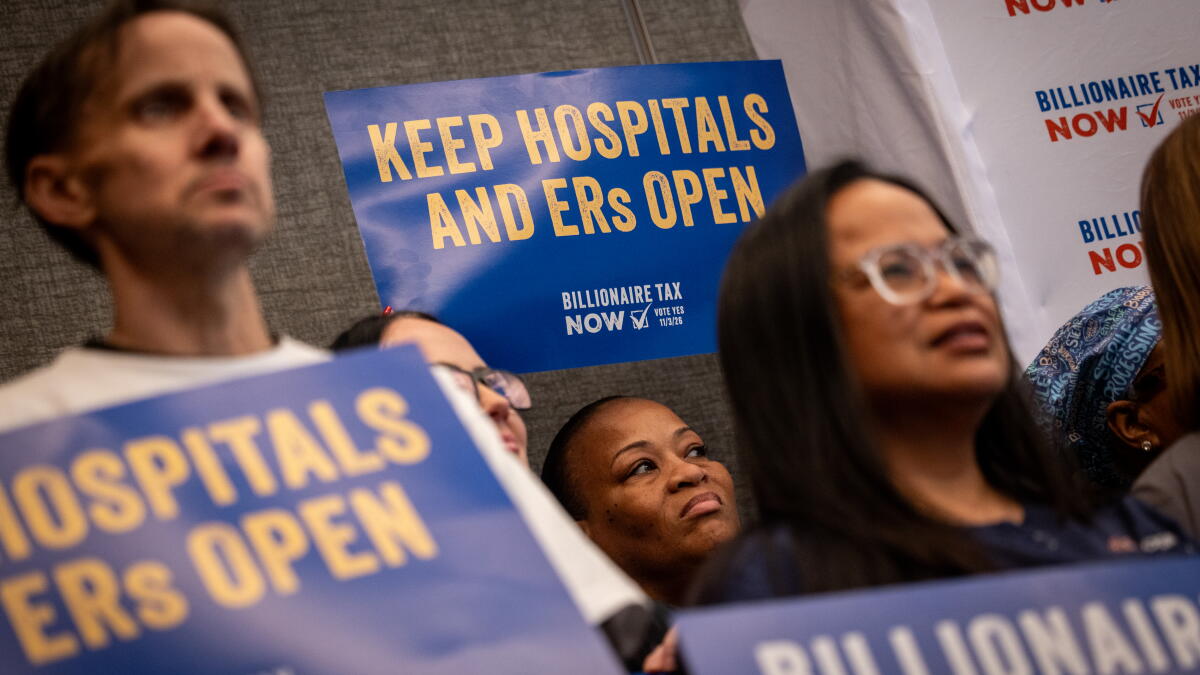
Despite a nationwide blue wave in the midterm election, California’s much-debated billionaire tax didn’t get the support many expected in one of the country’s most liberal states. Since the Golden State’s powerful healthcare union proposed the new tax, supporters of Proposition 40 have faced a fierce, expensive battle against the world’s richest people. In what has been described as a David-versus-Goliath fight, the underdog appears to have lost.
The proposition, which would have imposed a one-time 5% tax on the assets of California billionaires to mostly fund healthcare, seemed headed toward defeat as votes were tallied Wednesday. “In a deep blue state like California, most voters are going to support additional funding for healthcare, especially to replace Trump funding cuts. But in retrospect, the sponsors may wish they’ve been a little bit less ambitious,” said Dan Schnur, a politics and communications professor at USC, UC Berkeley and Pepperdine.
Nearly 56% of California voters rejected the proposal while 44% voted for Proposition 40. However, with roughly 6 million votes still needed to be counted, the results are still too close to call. The battle over the billionaire tax has been one of the most expensive ballot-measure fights in California’s history, sparking a debate over wealth inequality and taxing the ultrawealthy.
It also highlighted how billionaires have wielded more influence in politics. Well-known politicians such as U.S. Sen.
Bernie Sanders (I-Vt.), the California Democratic Party, healthcare workers and Hollywood celebrities including actor Mark Ruffalo, backed the wealth tax. But the idea drew opposition from California Gov. Gavin Newsom, the teachers union, Planned Parenthood, business groups and others who expressed fears that billionaires could flee the state.
The state’s next governor, Xavier Becerra, who just won, also opposed the tax. Though California’s $4.25-trillion economy remains a global powerhouse, and a major draw for investments in AI and aerospace, thousands of businesses have moved to Texas and other states in recent years due to lower costs. Opponents of the wealth tax heavily outspent Proposition 40 supporters, flooding televisions, radio, social media and smartphones with ads.
Their message: the wealth tax is a reckless experiment and a tax on everyone, not just billionaires. UC Berkeley law professor Brian Galle, who helped write the wealth tax proposal, said it’s tough to “fix a broken system” and get the facts to people when they were up against the ultrawealthy. Billionaires also own media outlets and social media companies, megaphones that help spread political messaging.
“When billionaires have half a dozen different strategies for buying this election, it shows that they already have too much money and pay too little back,” he said. Support for the billionaire-bashing proposition had already begun to wane in recent months. A poll by UC Berkeley’s Institute of Governmental Studies, co-sponsored by the Los Angeles Times and released last week, showed that voter support for Proposition 40 had fallen to 42% of voters surveyed last month from 48% in August.
The measure also may have lost fans because taxing assets rather than income can be a complicated and confusing process and sparks concerns among even non-billionaires on whether they want to allow the state to start demanding a slice of the value of the things that they own. No matter the result, Proposition 40 also fueled a conversation about taxing billionaires that will continue, Galle said. As of Wednesday afternoon, roughly $489 million has been raised to support and oppose Proposition 40 along with two ballot measures — Propositions 41 and 42 — that could block the wealth tax, data from the California secretary of state show.
The vast majority of that funding, more than $380 million, went toward killing the billionaire tax. Supporters of the wealth tax, including the Service Employees International Union-United Healthcare Workers West, trailed far behind, contributing roughly $100 million, according to filings with the California secretary of state. Billionaires such as Google co-founder Sergey Brin contributed millions to a group called Building a Better California that funded ads against the wealth tax and propositions that could block it.
Money doesn’t always win an election, but a big funding imbalance is tough to overcome, Schnur said. “As important as the money was to beat Prop. 40, the coalition against it may have been just as important. You didn’t see Sergey.
You didn’t see tech billionaires in the ads. You saw teachers and nurses and firefighters,” he said. The four richest Californians — Brin, Nvidia Chief Executive Jensen Huang; Google co-founder Larry Page and Meta Chief Executive Mark Zuckerberg — would owe 40% of the estimated taxes to be collected from the billionaire tax, according to an L.A.
Times analysis . Ahead of the election, billionaires made moves to prepare for the potential tax. Zuckerberg expressed concerns that if he had to sell his stock to pay the tax that could reduce his control over the company, but Meta’s board struck a deal to address that fear.
The billionaire tax proposal also faced other big hurdles. Proposition 42 , which could have blocked the billionaire tax, was on track to pass. It would prohibit new taxes on “retirement holdings, individually-owned assets, and other forms of personal savings” and bar retroactive taxes.
“They didn’t just reject a single bad tax idea — millions of Californians backed the strongest protections available to protect their hard earned life savings from double taxation. They joined firefighters, law enforcement officers, building trades workers, seniors, veterans and small businesses in doing so,” said Nathan Click, a spokesman for Proposition 42. On the other hand, Proposition 41 — a proposal that would have required audits for new state special taxes, and also could have blocked the billionaire tax — was headed for defeat.
Supporters of Proposition 40 tried to convince voters that taxing roughly 200 billionaires was the solution to raise $100 billion needed to offset federal healthcare cuts. This week, the wealth tax’s supporters emphasized the high stakes. People won’t be able to afford healthcare coverage, children will die and hospitals will shutter, they said, if California lawmakers don’t find a way to get more funding.
“If Sacramento fails to protect patients and deliver a real solution that makes billionaires pay their fair share, healthcare workers will pursue every available avenue, up to and including returning to the ballot in 2028 with a billionaire tax,” said Suzanne Jimenez, chief of staff for the SEIU-UHW. More to Read
Source: Los Angeles Times